From Manual Trader to Systematic Scalper: Why I'm Removing Emotion from Trading
· #systematic-trading #trading-psychology #volume-profile #algorithmic-trading
After twenty years as a software engineer and business founder, I ran into a problem I could not solve by simply working harder at it. I love trading, but the manual grind was quietly demanding more time and more emotional energy than it was ever going to return.
I needed a way to keep trading as a serious side pursuit while my main focus stayed on building software. In hindsight the answer was obvious: treat trading the way I treat my tech business. Robust systems. Pure logic. Structured workflows. What follows is the honest version of how that transition actually went, including the parts I got wrong.
Why walk away from manual trading?
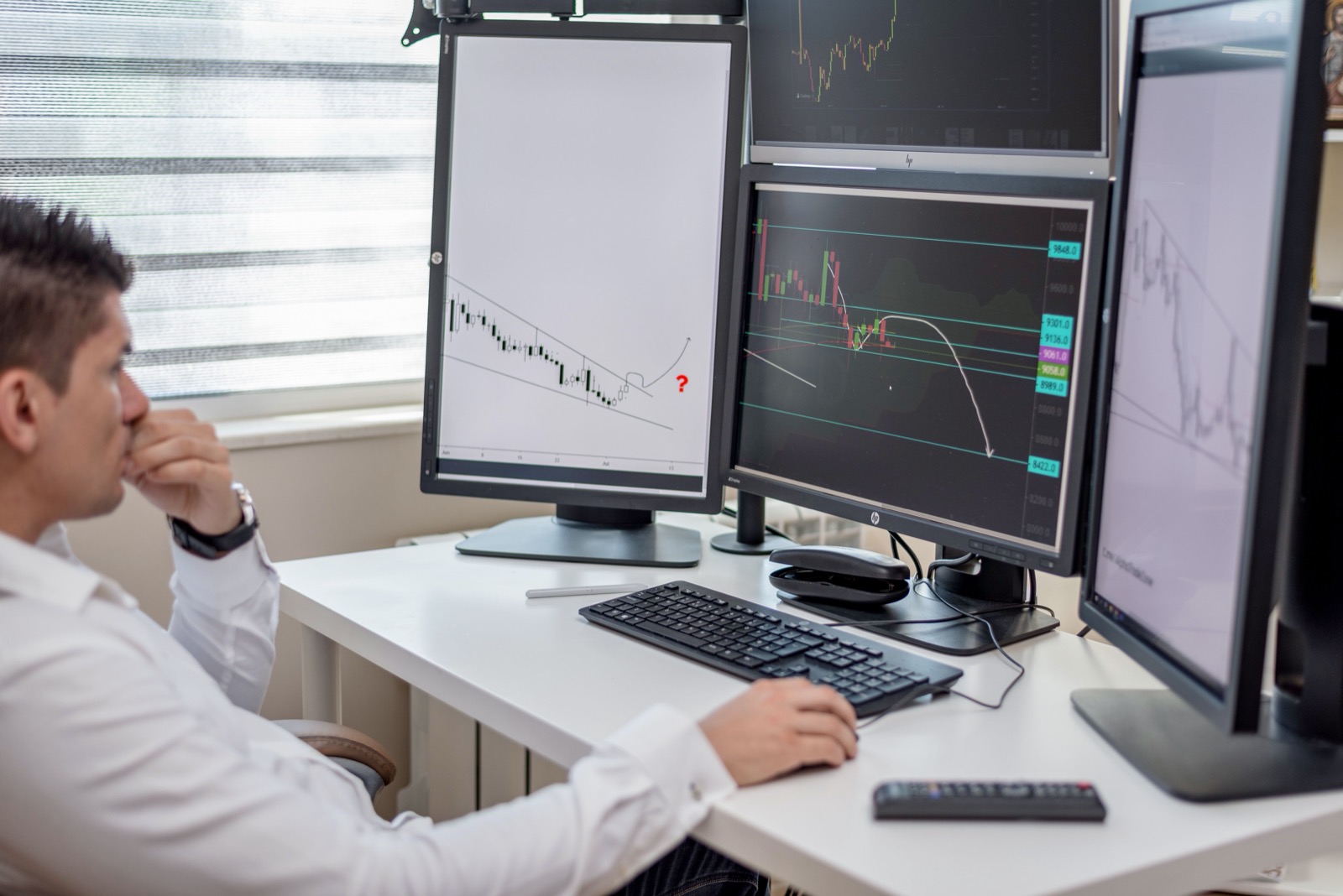
The trading world is loud. It runs on uncertainty, hype, and a constant fear of missing out. As a founder, I do my best work in a calm, structured environment, and manual charting gave me the opposite: screens to babysit, impulses to fight, and a psychology tax on every decision I made.
Algorithmic trading became my way out of that noise. By turning market rules into code, I could step back from the emotion and let the data speak for itself.
One thing I want to be clear about from the start: this was never about building a "money machine." It is about building a discipline machine. Software feels no fear and no greed. It simply follows the plan, and that is the entire point.
Why did my first indicator bots fail?
I assumed two decades of writing software would make algorithmic trading straightforward. So I began the way most engineers do, by programming the textbook indicators: RSI, MACD, a few basic crossovers.
On paper they looked like magic. In practice, my first bots bought the exact top and sold the exact bottom. They added almost nothing to my live results. Textbook theory and real market execution turned out to be two different worlds, and the failure taught me three things I have not forgotten since.
Lagging data is a rearview mirror. Moving-average logic describes what happened ten bars ago. You cannot build a reliable entry from the past alone, with no read on the present. That was an expensive lesson, but a necessary one.
No indicator setting is universal. An RSI configuration that behaves well on a EURUSD daily chart can quietly drain an account on a XAUUSD one-minute chart. Every asset and every timeframe has its own heartbeat, and a system with no asset-specific context is really just guessing.
Time of day matters as much as price. A breakout rule that holds up through the London to New York overlap can bleed out slowly across the quiet Asian session. Code without session awareness is noise. It is not only what you trade, it is when.
What changed the approach?
Once I accepted that the textbook bots were never going to work, I had to slow down and think like an engineer again. Throwing standard indicators at a chart and hoping was not a strategy. I needed to understand real market structure, volume, and order flow, and to stop predicting the past so I could start measuring the present.
Part of that meant facing an uncomfortable fact about retail trading: most of the standard toolkit reacts to information that has already aged. If I wanted a systematic tool I could run alongside a full-time business, I had to see where trading volume actually concentrated, not merely where price had already been.
Why Volume Profile?
Volume Profile changed how I read a chart. Unlike time-based indicators, it shows where the most trading activity occurred at each price level: a structural map of support, resistance, and the prices the market has agreed to accept.
For a software engineer, that was the missing piece. It is objective, data-driven, and logical. As I applied my engineering habits to researching and backtesting Volume Profile concepts, one thing became clear: for short-duration setups, scalping in particular, this structure supports far more disciplined decisions than momentum guessing ever did. Levels where the market has historically accepted or rejected value are something you can actually write rules around.
Scalping also respects the constraint that started this whole journey. Less time exposed to the market means trading stays a sustainable side pursuit instead of a second full-time job.
What did I actually build?
MasterVP is my answer to the time and emotional drain of manual trading. It computes precise trade levels automatically and draws the risk structure directly on the chart. It does the heavy lifting of the analysis so that I can review a setup calmly and decide, on my own risk tolerance, whether it is worth taking.
The MT5 Expert Advisor version can execute that workflow to my exact configuration: maximum risk per trade, session windows, and the rest. The software handles the mechanics of execution; I stay fully in control of the risk settings and the strategy behind them.
What it is not: a signal service, a profit guarantee, or a substitute for judgment. It is a copilot that removes the impulse layer from trading, which is the layer that was costing me the most.
What's the real lesson?
Trading no longer feels like an emotional rollercoaster, and that, far more than any single winning trade, is what I count as the real result. The path ran from stressed manual trader, through a graveyard of failed textbook bots, to a systematic framework built on market structure. Every failure along the way pointed back to the same root cause: decisions made from emotion, or from stale data.
If you're an engineer looking at markets, my honest suggestion is to expect your first systems to fail, and to treat those failures as data. That part is not a detour. It is the job.
This article was composed from posts p1–p15 of the KenKem build-log series. Educational purpose only. Not financial advice. Past performance does not guarantee future results.